When a buyer sends us an inquiry for a solar mounting system, the first question is rarely about price.
The more important question is whether we have enough project information to understand what needs to be designed.
A solar mounting system is not selected independently from the solar module, roof, ground, wind conditions, or installation method. If key information is missing, a supplier may only be able to provide a preliminary quotation. Once the missing information becomes available, the structure, material quantity, or even the fixing method may need to change.
For a solar mounting system manufacturer, a useful RFQ is therefore not simply a product name and required quantity. The quality of the project information directly affects the accuracy of the mounting-system design and quotation.
Start With the Project Location
The project location is one of the first pieces of information we need.
It determines the environmental conditions that the mounting structure may need to withstand, including wind and snow conditions. It can also affect corrosion considerations and the applicable structural standards.
For example, a rooftop PV project in a high-wind coastal area should not automatically use the same structural assumptions as a project in an inland low-wind region.
The supplier should know at least the country, region, or project site before finalizing the design.
For larger projects, the exact site location is even more important because local design requirements may affect the structural calculation.
Tell the Manufacturer What Type of Installation You Have
"Solar mounting system" is too broad for a detailed quotation.
The manufacturer needs to know where the system will be installed.
Is it:
- A tile roof?
- A metal roof?
- A concrete flat roof?
- A ground-mounted PV site?
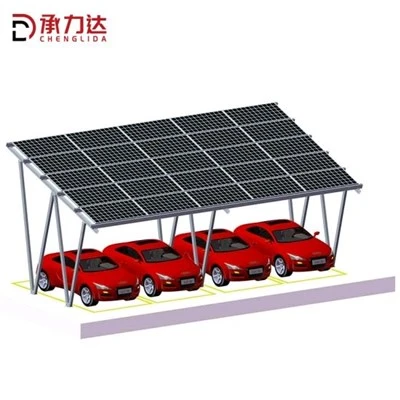
- A solar carport?
- A balcony or small distributed PV installation?
The roof or ground condition determines the basic fixing method.
For example, a tile roof solar mounting system may require roof hooks, while a flat roof may use a ballasted or mechanically fixed structure. A ground-mounted solar system requires a completely different support and foundation arrangement.
The earlier the installation type is confirmed, the less likely the quotation is to be based on incorrect assumptions.
Provide the Solar Module Datasheet
This is one of the most important documents in a mounting-system RFQ.
Do not provide only the module power, such as "550 W panel."
The manufacturer needs the actual module dimensions and mounting information.
Useful data includes:
Module length
Module width
Module weight
Module thickness
Frame height
Clamp zone
Mounting-hole position, if applicable
Framed or frameless construction
Module dimensions directly affect solar mounting structure design.
They determine where the rails and clamps can be positioned and can affect support spacing and overall panel layout.
Large-format modules are especially important because their dimensions may differ significantly from older module sizes.
Tell the Manufacturer the Panel Orientation
The supplier should also know whether the modules will be installed in portrait or landscape orientation.
This is not merely a visual preference.
Changing the orientation changes the relationship between the module frame and the mounting rails. It can also affect row length, rail length, clamp position, and support arrangement.
For a large rooftop or ground-mounted PV project, the orientation should ideally be shown on the layout drawing.
If the orientation has not yet been finalized, tell the manufacturer that it is still under discussion rather than allowing the supplier to make an assumption.
Provide the Roof or Site Drawing
A roof drawing can save a significant amount of back-and-forth communication.
For a rooftop solar mounting system, the drawing should ideally show:
Roof dimensions
Roof edges
Ridges and valleys
Roof slopes
Columns or structural members
Skylights
HVAC equipment
Exhaust systems
Roof drains
Access areas
Existing obstacles
The usable roof area is rarely the same as the total roof area.
If the manufacturer designs the solar panel mounting structure using the total roof dimensions without considering these obstacles, the proposed module layout may not work during installation.
For a ground-mounted project, the site drawing should show the available land, terrain, boundaries, roads, drainage, and other relevant restrictions.
Explain the Roof Structure
For rooftop projects, the visible roof material is only part of the information.
A metal roof, for example, may be supported by different types of purlins and structural members.
For a flat roof, the manufacturer may need to know whether the roof is concrete, steel, or another construction.
For a tile roof, the supplier needs to understand what structural members are available beneath the tiles for fixing the roof hooks.
This information helps determine the solar mounting system fixing method and load-transfer path.
A mounting bracket can look suitable on the roof surface while still being unsuitable if there is no appropriate structural member underneath.
Provide Wind and Snow Conditions
Wind and snow loads are essential inputs for structural design.
The supplier needs to know the applicable design values or the project location and design standard from which these values can be established.
Wind conditions can affect:
Rail section
Support spacing
Clamp requirements
Connection design
Foundation requirements
Snow conditions can similarly affect rail spans, supports, posts, and connections.
For this reason, solar mounting system wind load and solar mounting system snow load should be established before the final structure is approved.
A catalogue specification should not be treated as a substitute for project-specific structural design.
Ground-Mounted Projects Need Soil and Foundation Information
For ground-mounted PV, the RFQ needs another layer of information: the ground.
The manufacturer may need:
Soil type
Soil bearing capacity
Soil report
Groundwater conditions
Terrain information
Elevation differences
Foundation preference
Available installation equipment
The foundation can be one of the biggest differences between two ground-mounted projects.
A structure designed for relatively stable soil cannot simply be copied to a site with weak or difficult ground conditions.
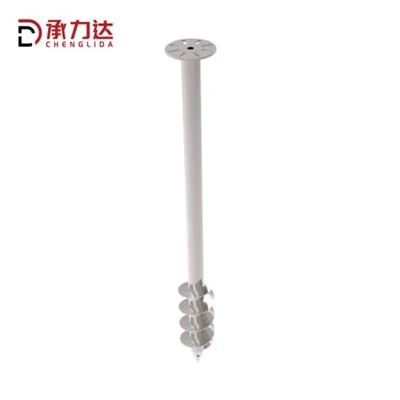
For a ground-mounted solar mounting system, the foundation should therefore be considered together with the posts, rails, module configuration, and environmental loads.
State the Required Tilt Angle
The required panel tilt should be included if it has already been determined.
The tilt angle affects the mounting structure height and geometry. On flat roofs and ground-mounted systems, it can also influence row spacing and shading.
On pitched roofs, the existing roof slope may largely determine the module angle.
If the project requires an adjustable mounting system, specify the desired range rather than simply writing "adjustable."
For example, Chenglida's tile roof solar mounting solution provides a 5°–45° adjustable tilt range, while its flat-roof mounting solution uses a 10° fixed angle. These are different structural approaches designed for different installation conditions.
Tell the Manufacturer How the Modules Will Be Distributed
The total number of modules is useful, but the supplier also needs to understand how they will be distributed.
For example:
1,000 modules on one roof
500 modules on two separate roofs
Multiple buildings with different roof conditions
Several ground-mounted array blocks
This affects the mounting-system quantity and layout.
A project with several small roof sections may require more connectors, different rail lengths, and different mounting arrangements than a single continuous array containing the same number of modules.
Include Installation and Project Requirements
Some buyers have requirements that are not directly visible from the drawings.
For example:
Limited installation time
Restricted roof access
Pre-assembled components
Specific packing requirements
Container-loading requirements
Local installation labor limitations
Required installation tools
Specific fastener materials
Local certification requirements
These details can affect the preferred mounting-system configuration.
For large projects, installation efficiency can be just as important as the individual component price.
Specify the Applicable Standards
If the project must comply with a specific structural or industry standard, tell the manufacturer at the RFQ stage.
Different markets can have different requirements for structural calculations, materials, corrosion protection, electrical bonding, and product documentation.
This is especially important for overseas PV projects because the manufacturer's standard design assumptions may not automatically match the requirements of the destination market.
Providing the required standard early avoids redesign later.
What Happens If the Information Is Incomplete?
Incomplete RFQ information does not necessarily prevent a manufacturer from giving a preliminary quotation.
But the quotation will usually contain assumptions.
For example, the supplier may assume:
A certain module size
A certain wind speed
A certain roof structure
A particular module orientation
A standard support spacing
A specific foundation type
If those assumptions change later, the mounting-system quantity and price may change as well.
This is why buyers should distinguish between a budgetary quotation and a project-specific technical quotation.
The more complete the information, the closer the quotation can be to the final design.
A Practical RFQ Checklist
Before sending an inquiry to a solar mounting system manufacturer, it is useful to prepare the following:
| Information | Why It Matters |
|---|---|
| Project location | Determines environmental and design conditions |
| Installation type | Determines the basic mounting method |
| Roof/site drawing | Defines the usable installation area |
| Roof structure | Determines load-transfer and fixing method |
| Module datasheet | Determines dimensions, weight, and clamp position |
| Module orientation | Affects rails, supports, and layout |
| Wind load | Affects structural and connection design |
| Snow load | Affects structural loading and support spacing |
| Soil information | Important for ground-mounted foundations |
| Tilt angle | Determines mounting geometry |
| Module quantity | Establishes system scale |
| Module layout | Determines rail and component requirements |
| Applicable standards | Defines engineering and documentation requirements |
| Installation requirements | Helps optimize the system for site conditions |
| Delivery requirements | Affects production and packing planning |
Good Project Information Leads to a Better Mounting Solution
A solar mounting system quotation is only as accurate as the information behind it.
The manufacturer does not need every detail to start a conversation, but the critical project information should be established before the mounting structure is finalized.
The most important documents are usually the module datasheet, roof or site drawing, project location, structural information, wind and snow conditions, and required installation configuration.
With these inputs, a solar mounting system supplier can move from a generic product quotation toward a real project solution.
That difference matters.
For a small installation, an incorrect assumption may affect a few components. For a large commercial or utility-scale PV project, the same assumption can be repeated across thousands of mounting points.
A good RFQ therefore does more than help the supplier quote faster. It gives the manufacturer the information needed to design the solar mounting system around the actual project instead of designing around assumptions.