In most solar project discussions we've had at Wuxi Chenglida Machinery Co., Ltd., one of the first practical decisions is not about panels or inverters-it's about where the system will actually be installed. And at that point, the choice usually comes down to two options: roof mount or ground mount solar systems.
On paper, both systems generate electricity in the same way. In reality, the decision has a strong impact on installation cost, system design, maintenance access, and long-term expansion potential.
We've seen both solutions work extremely well-but in very different project conditions.
Roof Mount Solar Systems: Using Existing Space
Roof-mounted solar systems are installed directly on building rooftops, whether residential, commercial, or industrial.
In many conversations with project owners, roof space is described as "free area already available." That is often the main reason roof systems are selected-they use existing structures without requiring additional land.
We once discussed a warehouse project where rooftop installation was the only realistic option due to land constraints around the facility. In that case, the design focus was not expansion, but maximizing safe installation coverage within the available roof structure.
Advantages of Roof Mount Systems
- Efficient use of existing building space
- No additional land required
- Suitable for urban and industrial buildings
- Lower land acquisition cost
- Faster project approval in many cases
However, roof systems also depend heavily on the structural condition of the building. Load capacity, roof type, and waterproofing considerations all play an important role in system design.
Ground Mount Solar Systems: Maximum Flexibility
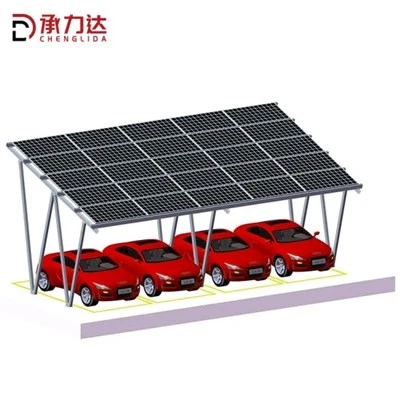
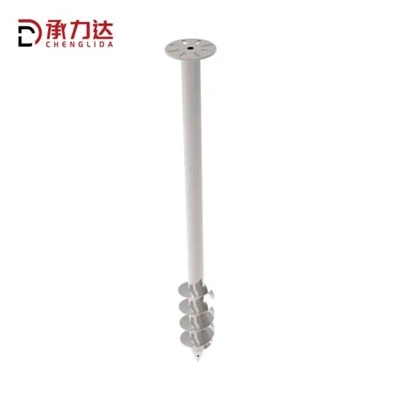
Ground-mounted solar systems are installed on open land using structural support frames fixed into the ground.
From a design perspective, ground systems offer far more flexibility than roof installations. Tilt angle, orientation, spacing, and layout can all be optimized for performance.
We often hear from project developers that ground-mounted systems are preferred when energy output is the main priority and land availability is not a limitation.
Advantages of Ground Mount Systems
- Flexible system design and layout
- Easier maintenance and cleaning access
- Better optimization of tilt angle
- Suitable for large-scale solar farms
- Easier system expansion in phases
In utility-scale projects, ground-mounted systems are often the default choice because they allow engineers to design for maximum efficiency rather than structural constraints.
Key Differences in Real Project Conditions
In practice, the decision between roof and ground mounting is rarely theoretical. It depends on real-world constraints:
1. Available Space
Roof systems: limited by building structure
Ground systems: limited by land availability
2. Installation Cost Structure
Roof systems: lower land cost, but may require structural assessment
Ground systems: higher land requirement, but simpler structural scaling
3. Maintenance Access
Roof systems: more difficult access
Ground systems: easier inspection and cleaning
4. Design Flexibility
Roof systems: constrained by building layout
Ground systems: highly customizable
Environmental and Structural Considerations
Weather conditions also influence system selection.
For example, in areas with heavy snow or strong wind loads, structural engineering requirements become more critical. Roof-mounted systems must be carefully evaluated to ensure building safety, while ground-mounted systems can be reinforced through foundation design.
We've seen projects where environmental factors ultimately became the deciding reason to choose one system over the other, even when initial planning favored the opposite.
- Cost vs Long-Term Value
Cost is always part of the decision, but it is not the only factor.
Roof-mounted systems often reduce land-related costs, which can make them attractive for commercial buildings and factories. Ground-mounted systems may involve higher upfront land use but offer easier maintenance and scalability.
Experienced developers tend to evaluate both options based on total lifecycle performance rather than initial installation cost alone.
- Final Thoughts
At Wuxi Chenglida Machinery Co., Ltd., our experience in solar mounting discussions shows that there is no universal "better" option between roof mount and ground mount systems.
Roof-mounted systems are ideal when space efficiency and building integration are priorities. Ground-mounted systems are better suited for large-scale, flexible, and performance-optimized installations.
In real projects, the right choice depends on a combination of site conditions, budget structure, energy targets, and long-term operational strategy.
A well-planned decision at this stage often determines how efficiently the solar system will perform over its entire service life.